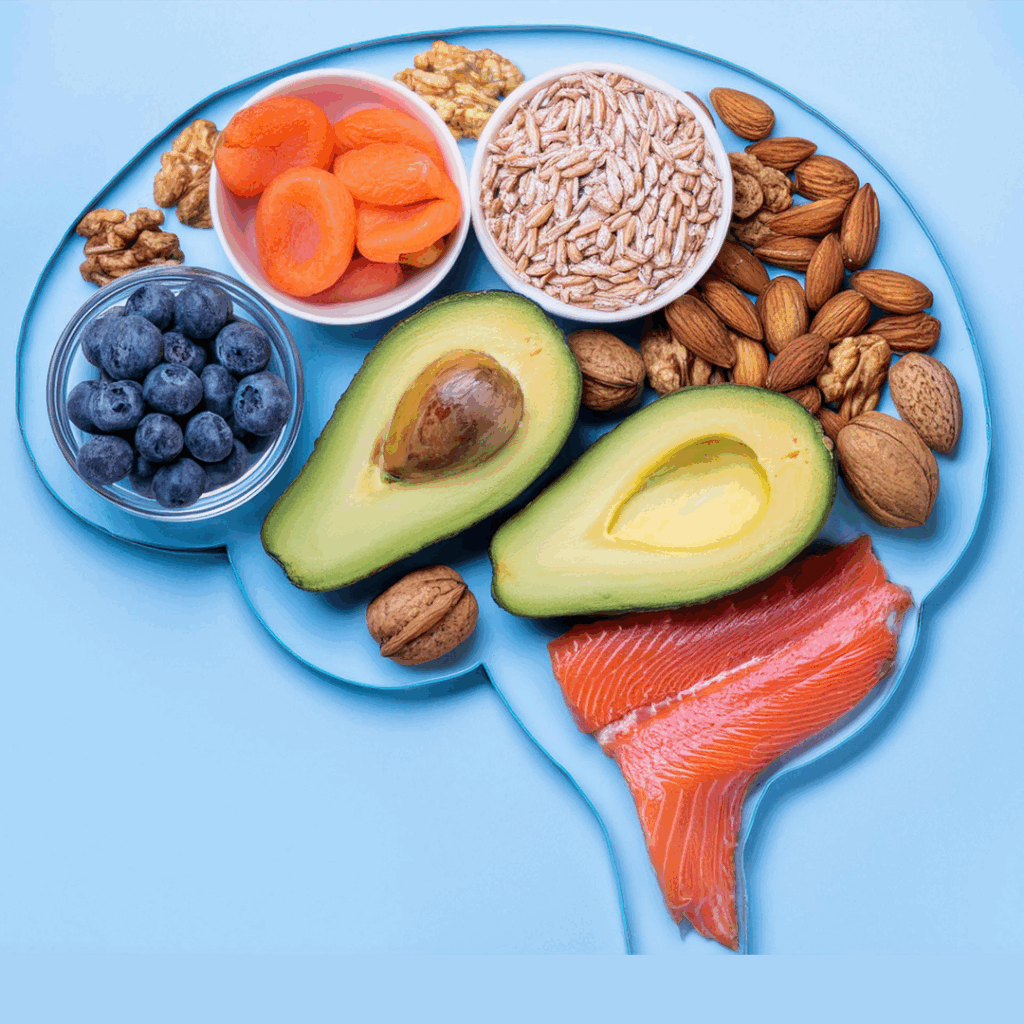
Just as exercise affects your mental well-being, so too does the food you eat. Here’s how your diet can impact your mood:
Balanced Diet, Balanced Mood: Eating a well-balanced diet rich in fruits, vegetables, whole grains, lean proteins, and healthy fats provides your body with the nutrients it needs to function optimally, including your brain. Aim for a diverse array of colourful foods to ensure you’re getting a variety of vitamins, minerals, and antioxidants.
Omega-3 Fatty Acids: Found in fatty fish like salmon, walnuts, flaxseeds, and chia seeds, omega-3 fatty acids are crucial for brain health. They have been linked to reduced inflammation in the brain and improved mood regulation, making them a valuable addition to your diet.
Probiotics: Your gut health is closely connected to your mental health. Consuming probiotic-rich foods like yoghurt, kefir, sauerkraut, and kimchi can help maintain a healthy balance of gut bacteria, which has been associated with improved mood and reduced symptoms of anxiety and depression.
Limit Sugar and Processed Foods: While sugary snacks and processed foods may provide a temporary mood boost, they can ultimately lead to energy crashes and mood swings. Opt for whole, nutrient-dense foods instead to stabilise your blood sugar levels and support sustained energy throughout the day.
Conclusion
A balanced diet into your lifestyle isn’t just beneficial for your physical health. It’s also essential for nurturing your mental well-being. By nourishing your body with wholesome foods, you can cultivate a happier, more resilient mind that’s better equipped to handle life’s challenges. So fill your plate with colourful goodness, and embark on a journey to elevate your mood from the inside out!